 Rich Martin
Sample Demand Letter for Personal Injury Car Accident
Sample Demand Letter for Personal Injury Car Accident
A complete sample demand letter for a personal injury car accident claim, with the car-specific evidence, sections, and mistakes that move an adjuster.

A car accident file looks simple until you sit down to write the demand. This guide walks through a sample demand letter for personal injury car accident claims, section by section. For each section, you'll see what the adjuster is looking for.
The police report, the vehicle photos and the ER visit each need a place. So do the physical therapy notes, the PIP ledger and the wage letter. All of it has to land in the right order, with numbers that match the bills.
The sample uses a fictional rear-end collision. Every name, report number and dollar figure is invented. You can get the full sixteen-section version free in Word on our personal injury demand letter template page.
Why Do Car Accident Demands Need Their Own Structure?
Most demand letters share one skeleton, but motor vehicle claims put pressure on three places other cases don't. Liability comes with a police report you can cite, and property damage shows the force of the impact. Coverage layers like PIP, MedPay and underinsured motorist coverage change the math before you name a number.

Liability is documented, so use it
Car crashes generate a police report and often a citation. Sometimes you also get witness statements and dashcam or 911 audio. Cite those exhibits in your liability section, and the adjuster has little room to argue comparative fault.
A letter that only describes the crash invites that argument.
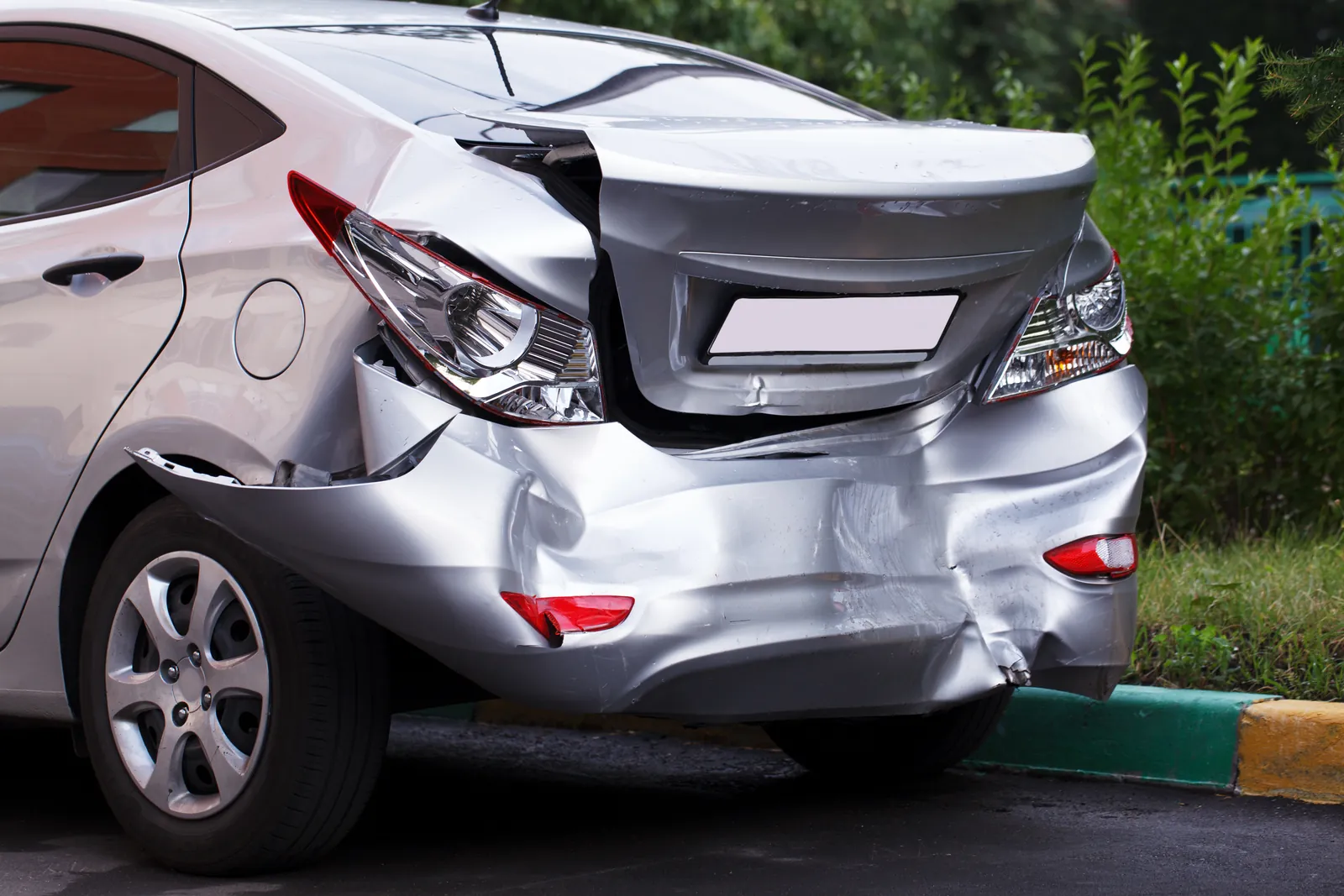
Property damage is evidence of force
Carriers routinely discount soft-tissue claims from low-speed collisions. Photographs of both vehicles and the repair estimate are the most direct answer to that defense. That's why property damage belongs in your letter, even when the property claim was paid separately.
Coverage layers change the math
PIP or MedPay may already have paid part of the bills. The at-fault driver's bodily injury limits may be lower than the damages. Underinsured motorist coverage may sit behind them, so your demand has to account for each layer before it names a number.
What Should a Car Accident Demand Letter Include?
A complete car accident demand letter runs fourteen core sections. Most car accident claims add two optional ones, property damage and wage loss, for sixteen in total: the 14 + 2 structure. If your client has prior injuries in the same body region, add a pre-existing conditions subsection inside the causation analysis.
Car-Specific Content for Each Section
The skeleton is shared. What goes inside it isn't. This table maps the sections that change most in a motor vehicle claim to the content and the record behind them.
| Section | Car accident specifics | Source record |
|---|---|---|
| Accident information | Direction of travel, signal state, speed estimate, point of impact, how far the vehicle was pushed, seatbelt use, ambulance transport | Police report, client intake, photos |
| Liability | Admission at the scene, citation, primary collision factor, independent witnesses | Police report narrative and citation |
| Property damage | Damage to both vehicles, repair estimate or total-loss valuation, airbag deployment | Estimates, body shop photos |
| Causation analysis | Mechanism of injury, onset on the date of loss, treating physician's causation opinion | ER record, imaging, specialist note |
| Special damages | Ambulance, ER, imaging, PT, specialist, pharmacy | Itemized bills |
| Wage loss | Full and partial disability periods, verified rate, arithmetic | Employer verification, work restrictions |
| Offer to settle | Figure or policy limits, deadline, litigation signal | Damages summary, confirmed limits |
For what goes into all sixteen sections, see how to write each section of a personal injury demand letter.
Sample Demand Letter for Personal Injury Car Accident Claims
The excerpts below come from the full sample. We shortened the tables and trimmed two narrative sections. You'll find the complete text in the Word template.
Caption, header and introduction
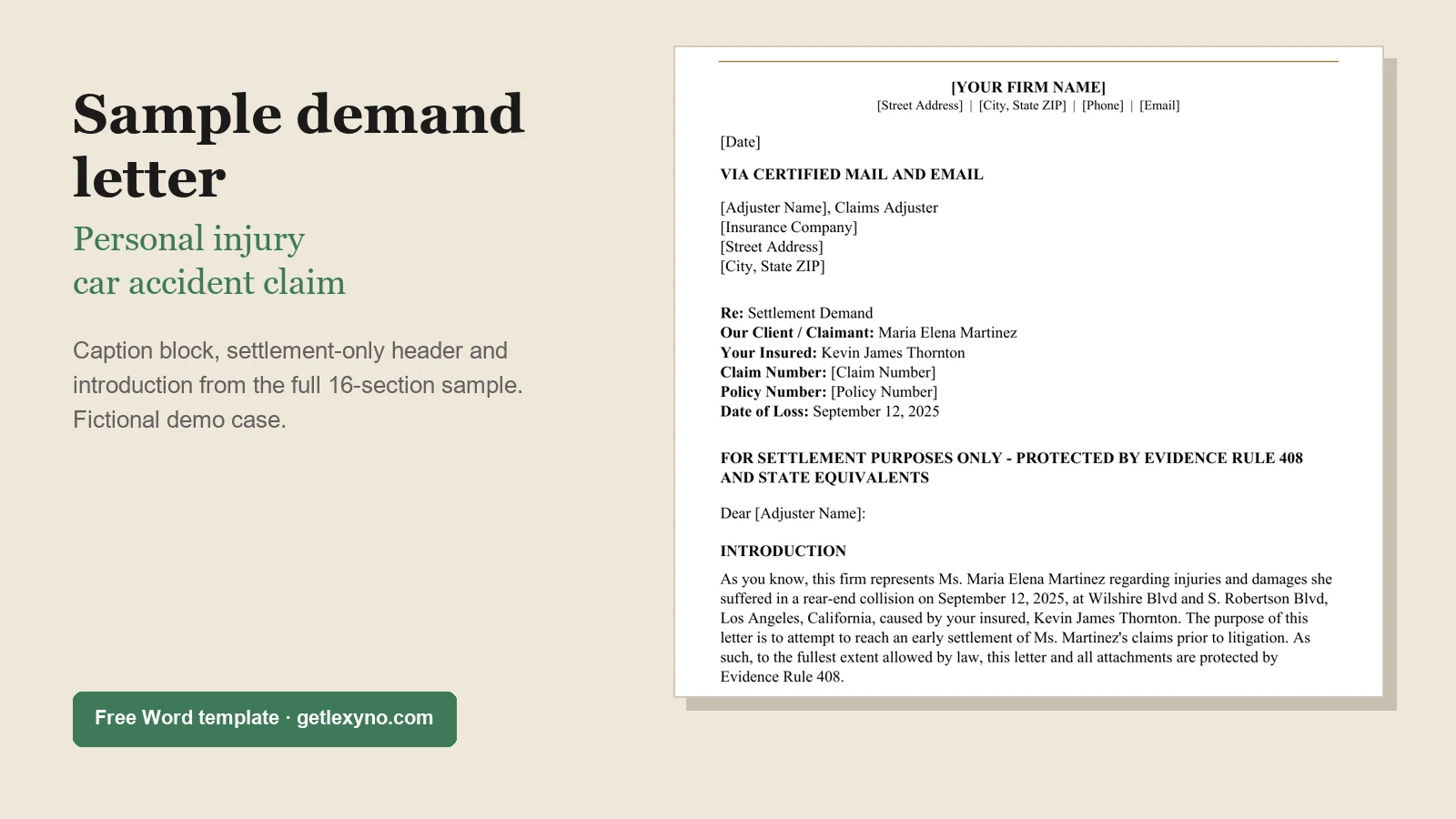
The caption identifies the claimant, the insured, the claim number and the date of loss. That way the letter files itself. The settlement-only header comes next.
The introduction runs two short paragraphs. It confirms representation, names the collision and the insured, and sets the 30-day response window. It doesn't argue anything yet.
Accident information and liability
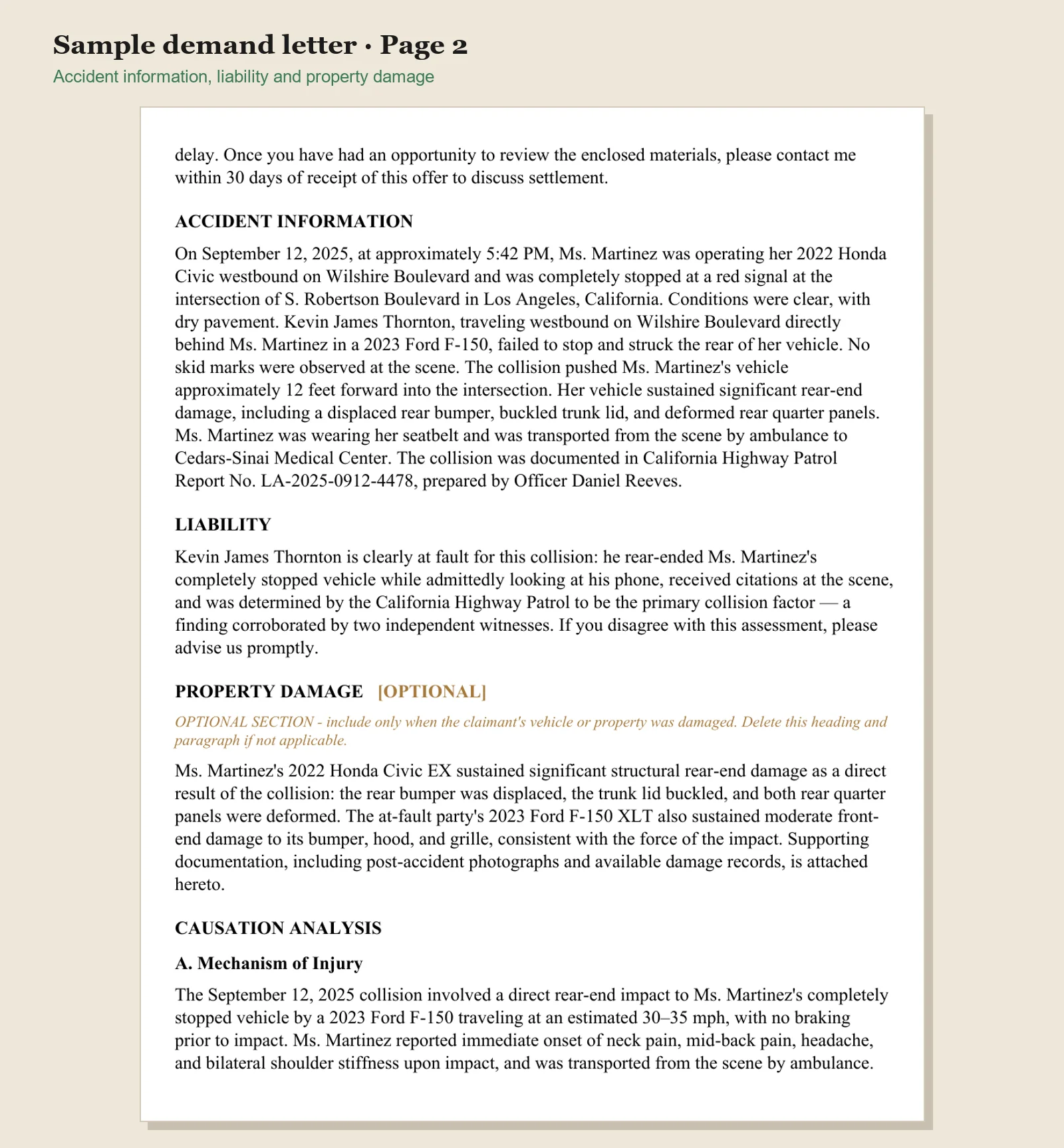
In the sample, the claimant is stopped at a red signal. A pickup strikes her from behind with no skid marks and pushes her car about twelve feet into the intersection.
The liability paragraph then stacks the evidence. The insured admitted looking at his phone, was cited at the scene, and was named the primary collision factor. Two independent witnesses round it out.
The paragraph ends by inviting the adjuster to dispute liability promptly. That puts any later comparative-fault argument on the record.
Property damage
The sample describes structural damage to the claimant's car: a displaced bumper, a buckled trunk lid and deformed quarter panels. It also names the front-end damage to the insured's truck. That's deliberate, because damage to the striking vehicle is the clearest evidence of the force of the impact.
Medical Records That Carry Causation
Causation is where a car accident demand is won or discounted. The sample proves it three ways.
First, the mechanism: a direct rear-end impact with no braking. Second, the symptoms: documented in the emergency department on the date of loss. Third, the opinion: a treating spine specialist says, within reasonable medical probability, that the collision caused the cervical disc injuries.
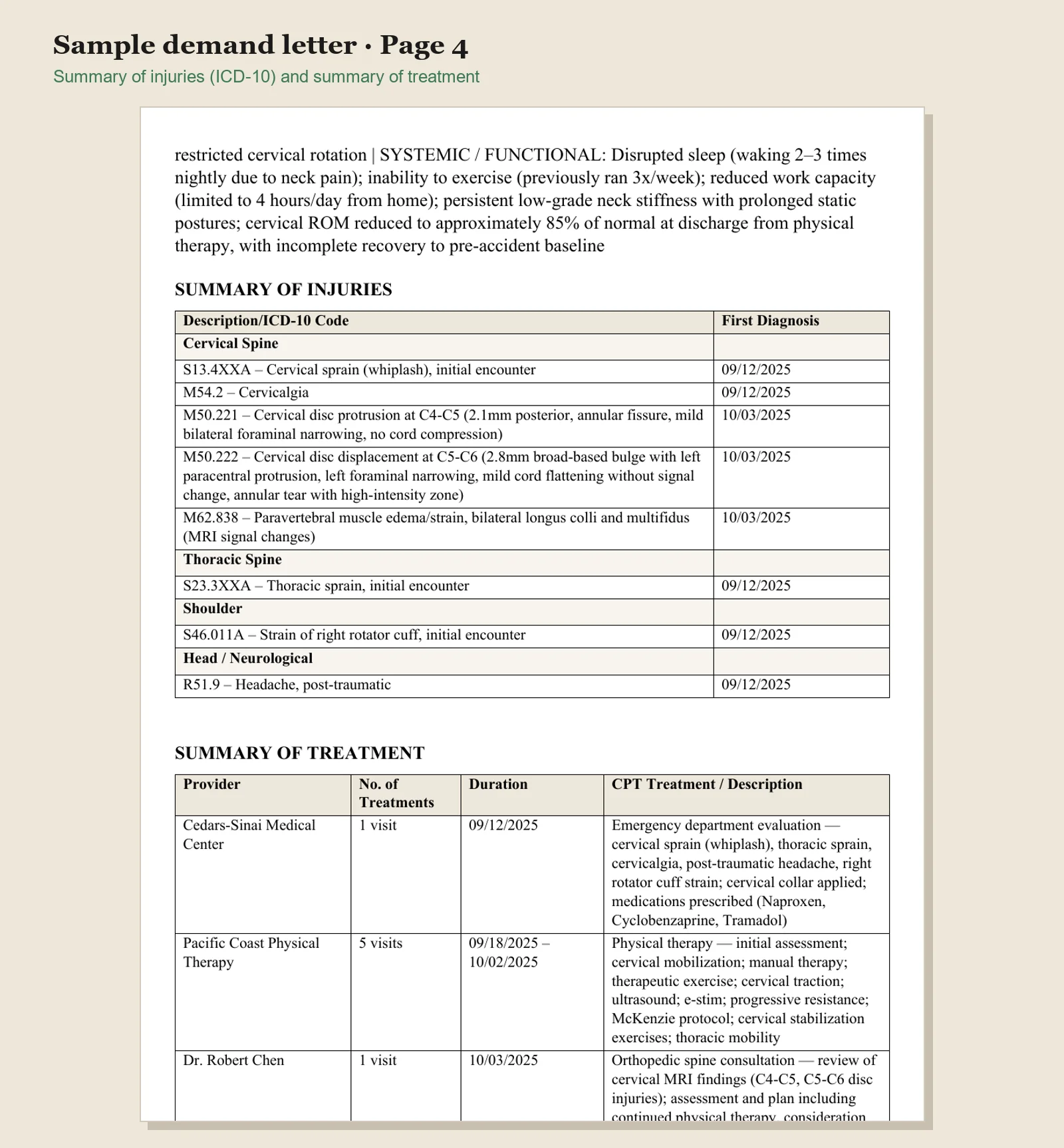
Two tables then make the injuries checkable. The summary of injuries lists every diagnosis with its ICD-10 code and the date it was first documented.
The summary of treatment lists each provider, the number of visits, the date range and what was done. An adjuster can verify every line against the records without reading the narrative.
Special Damages and Wage Loss
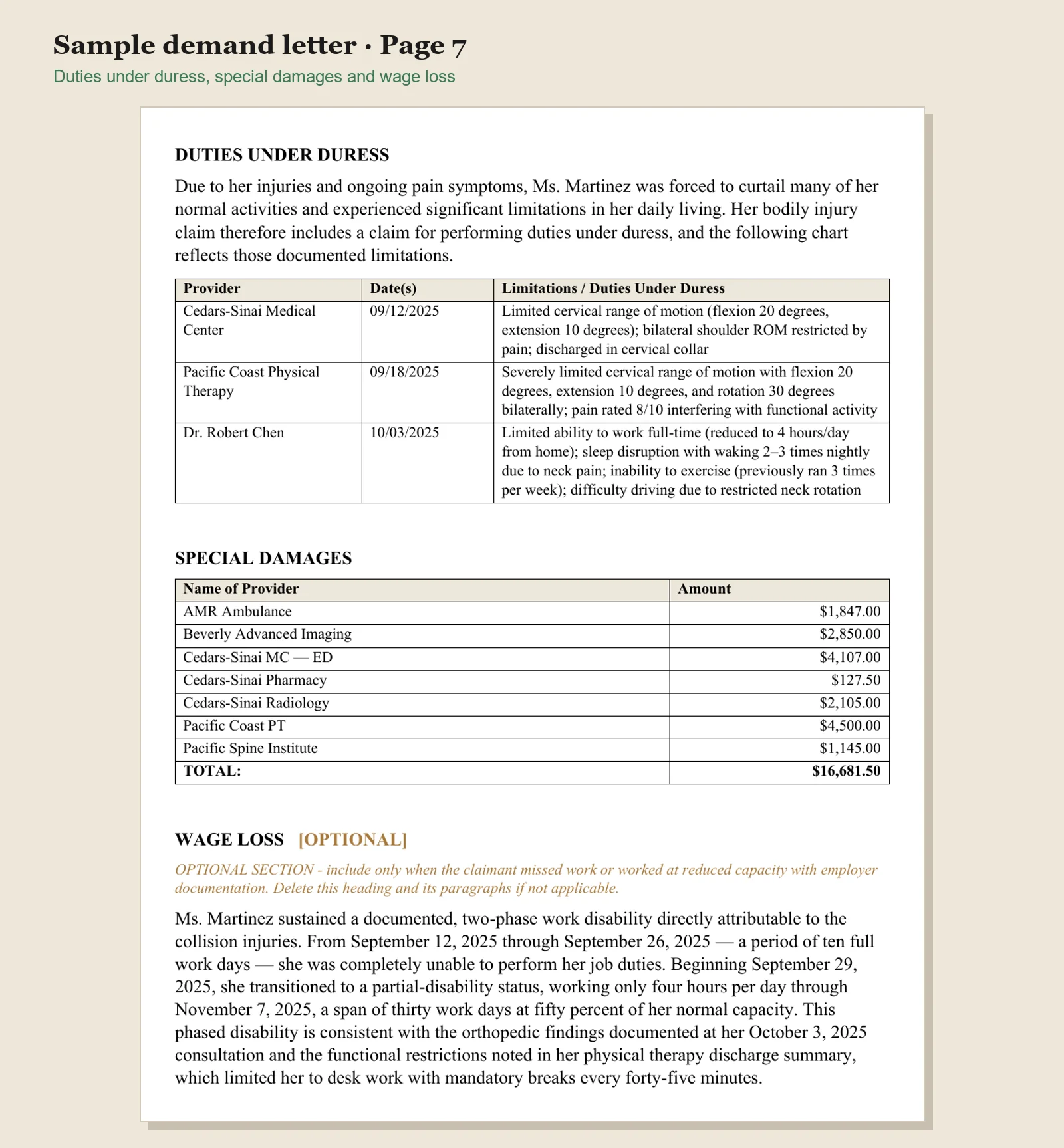
The specials table is the financial spine of your letter. In the sample, it lists seven providers at the billed amount.
| Provider | Amount |
|---|---|
| AMR Ambulance | $1,847.00 |
| Beverly Advanced Imaging (MRI) | $2,850.00 |
| Cedars-Sinai MC, emergency department | $4,107.00 |
| Cedars-Sinai Pharmacy | $127.50 |
| Cedars-Sinai Radiology | $2,105.00 |
| Pacific Coast Physical Therapy | $4,500.00 |
| Pacific Spine Institute | $1,145.00 |
| Total | $16,681.50 |
Wage loss is optional, so include it only when you have employer documentation. The sample documents two phases: ten work days of full disability, then thirty work days at half capacity. Both use a verified daily rate of $375.
The Offer to Settle
The offer is one sentence: the claimant will accept $95,000 or policy limits. It restates the 30-day window and says the offer is for settlement purposes only. It also sets a date after which the offer is withdrawn and suit is filed without further notice.
You made the argument in the sections above. The offer only states the conclusion.
By the time the adjuster reaches the number, every figure behind it has already been proven in a table they can check.
The Evidence Behind a Car Accident Demand
The structure tells the adjuster where to look. The records decide whether they believe what they find.
Liability evidence
Collect the police or highway patrol report, with its narrative and any citation. Add scene photographs and witness statements. Include dashcam footage, surveillance video or 911 audio when they exist.
Request body-camera footage early, because retention periods can be short.
Property damage evidence
Collect photographs of both vehicles from several angles. Add the repair estimate or total-loss valuation and the airbag deployment records. In a serious crash, include the event data recorder information.
Damage to the striking vehicle is often your best answer to a low-impact argument.
Medical evidence
The emergency department record establishes onset on the date of loss. Imaging reports carry the objective findings, so quote the impression verbatim.
Physical therapy notes document range-of-motion loss and pain scores over time. The treating specialist's note supplies the causation opinion and the prognosis.
Economic evidence
You need itemized bills from every provider and the PIP or MedPay ledger. Add an employer wage verification letter and the physician's work restrictions.
Reconcile the specials table, the treatment summary and the bills before the letter goes out. A provider that appears in one and not the others is the first thing an adjuster will question.
Sending the Demand Letter to the Insurance Company
A bodily injury demand goes to the adjuster handling the third-party claim, not to the insured. Send it by certified mail and email so you can prove the date of receipt. The response window usually runs from receipt.
Confirm the limits first
Before you send a policy-limits demand, ask the carrier in writing to disclose the insured's bodily injury limits. Some states require insurers to disclose limits on request. Florida's § 627.4137 is a common example.
Check the rules for time-limited demands
Several states regulate pre-suit or time-limited settlement demands in motor vehicle cases. If your demand misses a required term, it may lose the leverage you meant it to create.
Georgia's O.C.G.A. § 9-11-67.1 is the best-known example.
Account for no-fault and underinsured coverage
In no-fault states, PIP benefits generally apply first. A bodily injury claim there may require meeting a threshold. The Insurance Information Institute keeps a state-by-state overview of no-fault auto insurance.
If damages exceed the at-fault driver's limits, build your demand so the same records support an underinsured motorist claim.
Keep the settlement-only header
Federal Rule of Evidence 408 and its state counterparts generally keep settlement offers out of evidence on liability. Label your letter accordingly.
Common Mistakes in Car Accident Demand Letters
| Mistake | What it costs | Fix |
|---|---|---|
| Sending before MMI | Future care goes undocumented | Wait for MMI or a clear prognosis, or reserve the right to supplement |
| Leaving out property damage | Hands the adjuster the low-impact argument | Include photos and estimates for both vehicles |
| Describing the crash instead of arguing fault | Invites comparative fault | Cite the admission, the citation and the witnesses in the liability section |
| Specials that do not reconcile | Every number becomes negotiable | Match the specials, the treatment summary and the bills line by line |
| Hiding a prior condition | Costs the letter its credibility | Disclose it and argue aggravation in the causation analysis |
| Generic pain and suffering | Reads like every other file | Use pain scores, range-of-motion numbers, sleep and lost activities |
| An open-ended deadline | No pressure behind the offer | Set a date and say what happens after it |
What Happens After You Send the Demand?
Response window starts
Injuries and specials entered
Offer, records request or partial denial
Usually several rounds
Settlement or suit
The adjuster receives the letter, enters the injuries and specials, then responds with an offer, a records request or a partial denial. Negotiation usually runs several rounds before settlement or suit. The one variable your firm controls is completeness, so attach every record and reconcile every number.
A complete letter gives the adjuster no reason to send it back for more. If treatment continues after the demand, send a supplemental letter with the new records and bills. If the deadline passes without a reasonable response, your next step is filing suit.
When to Send It
Send after maximum medical improvement, not after the last bill. The completeness of the medical picture should drive timing, because every gap in documentation is a dollar the adjuster keeps. If you must send earlier, say the client has not reached MMI and reserve the right to supplement, as the sample does in its wage loss section.
Keep the statute of limitations in view. A demand letter doesn't stop it from running. And a time-limited demand that expires close to the deadline leaves you little room to file.
Where the Time Goes
Gathering, ordering and reconciling these records is most of the work. By hand, a demand on a file like this typically takes a paralegal 15 to 20 hours. We break that down in how long it actually takes to write a demand letter.
The structure doesn't change when you speed it up. What changes is how much of it you build from scratch.
Get the Full Template
Free Word template with the complete sample
All sixteen sections, the optional property damage and wage loss sections marked, and a section-by-section writing guide.
The template includes the complete sample demand letter for personal injury car accident claims used throughout this article. It's ready to adapt to your own case and jurisdiction.
Frequently asked questions
The fourteen core sections of any personal injury demand, plus property damage and, when the client missed work, wage loss. In a car case the liability section should cite the police report, any citation, and witness statements, and the property damage section should cover both vehicles.
To the adjuster assigned to the third-party bodily injury claim at the at-fault driver's insurer, by certified mail and email so the date of receipt is provable. A separate claim may go to the client's own carrier for PIP, MedPay, or underinsured motorist benefits.
When documented damages approach or exceed the insured's bodily injury limits, a policy-limits demand with a clear deadline and complete records is common. Confirm the limits in writing first and check whether your state regulates time-limited demands.
After the client reaches maximum medical improvement or has a clear prognosis, so future care can be documented. Keep the statute of limitations in view; sending a demand does not stop it from running.
Yes. Lexyno's free personal injury demand letter template includes the full sixteen-section sample used in this article as a Word file, with the optional property damage and wage loss sections marked.
Related posts

Medical Record Chronology: Template and Example for PI
How to build a medical record chronology for a PI case: a free template, a filled-in example from a demo case, the right format, and mistakes to avoid.

Demand Letter to Insurance Company: A PI Firm's Guide
How a PI firm sends a demand letter to an insurance company: what to finish first, what the adjuster reads, deadlines, state rules and what comes back.

Medical Record Review for Attorneys: A PI Guide
A working guide to medical record review for PI attorneys: which records to collect, what to extract, how to catch gaps, and who should do the review.
What's next?
Ready to see the difference in your next case?
Put these strategies to work. Try a mock demand generated by Lexyno today.
Request Evaluation Access