 Rich Martin
Will AI Replace Paralegals? What Changes in PI Work
Will AI Replace Paralegals? What Changes in PI Work
Will AI replace paralegals in PI firms? What the tasks look like now, what the ethics guidance says about supervising staff, and the skills that matter.

Your senior paralegal saw the headline over coffee: another story saying AI will replace legal staff. She has eleven years in PI, knows every records department in the county by name, and catches the treatment gap the adjuster would have found. She asks you directly whether her job is next.
It's a fair question, and the internet's answers mostly come from people selling software. So do ours: Lexyno makes AI tools for PI firms, and you should weigh what follows with that in mind. This guide asks the question from inside a PI file: will AI replace paralegals? It covers which tasks are changing, what the ethics guidance says about staff using AI, and how to roll tools out without losing the people who make the file work.

Will AI Replace Paralegals?
Not under the rules as they stand. In a PI firm, paralegal work happens under an attorney's supervision, and the bar guidance in our served states keeps the attorney responsible for AI-assisted work. AI is taking over first drafts and sorting. Checking, judgment calls, deadlines and client contact still need people, and that work is growing.
What does change is the shape of the job. A paralegal who spent a day building a chronology may now spend an hour checking one. Whether that frees time for more cases or shrinks a team is a business decision each firm makes. The rules don't make it for you.
One more limit is worth knowing. In California, Business and Professions Code 6450 defines a paralegal as someone who works "under the direction and supervision of an active member of the State Bar." It also says a paralegal shall not provide legal advice or represent a client in court. AI tools don't change who's allowed to do what.
What Do PI Paralegals Actually Do?
A PI paralegal runs most of a file between intake and settlement: records, chronologies, demand drafts, liens, client updates and deadlines. Some of that work is first-draft writing and sorting, which AI handles well. Much of it is judgment, follow-up and relationships, which it doesn't. The table shows where each task falls.
| Task | Where AI helps | What stays with people |
|---|---|---|
| Intake | Organizing the intake form and documents | Talking to a scared client, spotting coverage and deadline issues |
| Records requests | Drafting request letters, tracking what's outstanding | Calling records departments, fixing rejected authorizations |
| Chronology and summary | Pulling dates, providers and findings into a first draft | Checking every entry against the page, flagging gaps |
| Demand letter | Drafting sections from the records | Verifying numbers, judgment on what to stress, attorney review |
| Liens | Listing lienholders from bills and notices | Negotiating reductions, confirming final figures in writing |
| Client updates | Drafting routine status letters | Calls, bad news, keeping the client in the case |
| Deadlines | Reminders | Owning the calendar and checking the count |
Our guides cover each of these: records retrieval, the medical record chronology, demand letter sections, medical liens and the pre-litigation stage. Once a case is filed, discovery deadlines are paralegal territory too.

What Do the Ethics Rules Say About Staff Using AI?
The bar guidance in our served states treats AI as another thing lawyers must supervise. California's 2026 guidance says supervising attorneys should set clear AI policies and train attorney and non-attorney staff. Washington's 2025 advisory opinion covers supervision of nonlawyers by name. Neither moves responsibility off the lawyer.
| Source | What it says that matters for staff |
|---|---|
| California State Bar, Practical Guidance on Generative AI (approved May 14, 2026) | Managerial and supervisory attorneys "should establish clear policies regarding the uses of generative AI." Staff should "receive periodic training on the appropriate use of AI." An attorney "remains fully responsible" for AI-assisted work |
| California Rule 5.3 | Lawyers with managerial authority must make reasonable efforts to ensure measures that give reasonable assurance a nonlawyer's conduct is compatible with the lawyer's obligations |
| WSBA Advisory Opinion 2025-05 | Covers competence, diligence, confidentiality, communication, candor, billing, and supervision under RPCs 5.1 and 5.3. The lawyer, "not the tool," is "ultimately responsible for the work" |
| NYC Bar Formal Opinion 2024-5 (August 7, 2024) | Lists the duty to supervise both lawyers and non-lawyers among the duties that apply to generative AI use |
New Jersey has issued its own guidance on lawyers' use of AI. Read it directly if you practice there. Two details from the sources above are worth repeating to your team. California's 2026 guidance says competence "requires more than the mere detection and elimination of false or fabricated AI-generated results." And Washington's opinion describes a Colorado lawyer who was disciplined after filing a motion with AI-generated citations he never checked.
Which Paralegal Tasks Change First?
The first tasks to change are the ones that turn a pile of documents into a first draft. That includes summarizing records, building a treatment timeline, drafting routine letters and sorting bills by provider. In each, the paralegal's role shifts from producing the draft to checking it against the source, line by line.
That shift is real work, and it takes skill. Someone has to notice when a date in the draft doesn't match the page, or when a treatment gap the adjuster will exploit is missing. Our post on why AI demand letters get numbers wrong covers the errors to look for. Our guide to AI medical chronology covers what to check in a timeline.
What Stays Human in a PI File?
Client relationships, judgment calls and accountability stay human. A client calls because they're scared about a bill, not to get a status code. A lien holder agrees to a reduction because someone made a case for it. A deadline gets met because one person owns the calendar. None of that is a drafting task.
- Clients. Explaining the process, delivering bad news and keeping them in treatment.
- Judgment. Knowing which finding matters and when to bring something to the attorney.
- Verification. Checking every number, date and quote against the source.
- Negotiation support. Working with providers and lienholders under the attorney's direction.
- Ownership. Being the person who knows where the file stands.
Notice what these have in common. Each one depends on knowing this client, this file and this attorney. A tool can draft the status letter, but you decide whether the client needs a call instead. That's the part of the job your firm can't buy from a vendor.
What Does Good Verification Look Like?
Good verification ties every fact in the draft to a page in the record. You check dates, providers, diagnoses, totals and quotes against the source, and mark anything you can't trace. Flag gaps and conflicts for the attorney instead of smoothing them over. A reviewer should be able to check your work quickly.
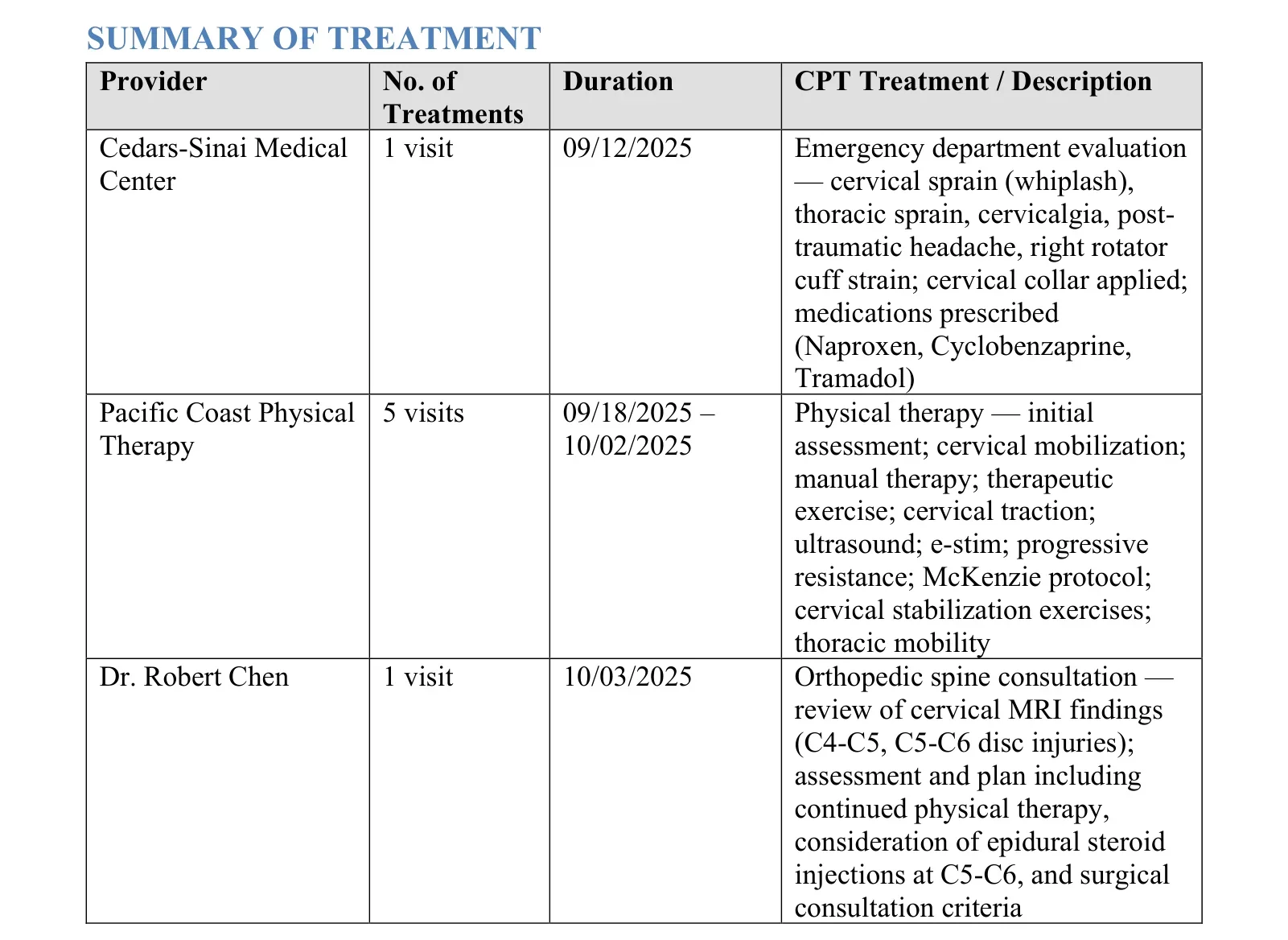
- Match each provider and visit count to the records you actually have.
- Check the first and last date of treatment for each provider.
- Compare billed totals to the bills, not to another summary.
- Read each diagnosis in the source, not just the code.
- Look for gaps in treatment, and note the reason if the file shows one.
- Check every quoted sentence word for word.
- List anything you couldn't verify, and send that list to the attorney.
That last step matters most. A draft with three honest question marks is safer than one that looks finished.
How Should a PI Firm Roll Out AI With Its Staff?
Start with a written policy, training and a review step. Decide which tools your staff can use, what client information can go into them, who reviews the output and how you'll bill for it. Then train your people on the tool itself. Don't send a link and leave everyone to figure it out on their own.
Washington's opinion includes a cautionary example on exactly that point. A partner rolled out an AI tool with only a brief email, "left a more thorough training on the product up to the individual users," and a motion went out without proper review. Use this as a checklist:
- Policy. Write down approved tools, permitted uses and what can't be entered.
- Confidentiality. Check how each vendor handles your data before client records go in. Our HIPAA and AI demand letter guide covers the questions to ask.
- Training. Train on each tool and repeat it. California's guidance calls for periodic training.
- Review. Define who checks what before anything leaves the firm.
- Billing. California's guidance says firms may charge for actual time spent, and hourly billing "must reflect the time actually spent on the client's matter."
- Feedback. Ask staff where the tool goes wrong, and update the policy.

Firms of every size face the same choices. Our posts on solo practice and AI and AI for personal injury lawyers cover how to choose tools.
How Should You Talk to Your Team About AI?
Talk to your team before the tool arrives, not after. Tell them what you're adopting, what it will and won't do, and how their work will change. Be honest about the business side too. Your paralegals have read the same headlines you have, and silence reads as bad news.
A short conversation covers most of it:
- What you're adopting, and why. Name the tool and the tasks you want help with.
- What stays the same. Who reviews the work, who talks to clients, who owns the calendar.
- What you expect from them. Checking against the source, flagging what they can't verify, following the policy.
- How you'll train them. Time on the tool, with real files, and a person to ask.
- How you'll measure it. Fewer errors reaching the attorney, not just faster drafts.
Then ask for their view. Your senior paralegal already knows where the file goes wrong. She'll also be the first to see where the tool does.

Which Skills Matter More Now?
The skills that matter more are the ones AI output depends on: reading medical records closely, checking work against the source, knowing a tool's limits, protecting client information and communicating with clients. A paralegal with those skills becomes the person who makes the tools safe to use.
| Skill | Why it matters more |
|---|---|
| Medical record literacy | You can't check a summary if you can't read the source |
| Verification habits | The draft arrives faster, so errors arrive faster too |
| Tool judgment | Knowing when a tool fits the task and when it doesn't |
| Confidentiality practice | Knowing what can go into which system |
| Client communication | Clients need a person, especially when news is bad |
If you're building those skills on a team, our posts on how paralegals work through demand letters and the medical record summary are good starting points.
Where Lexyno Fits
Lexyno doesn't make decisions on a case, and it doesn't take the review step out of anyone's job. Lexyno's AI demand letter software drafts the demand from the case's records, with source references that let a paralegal or attorney check each fact against the page. Our Fact-Lock post explains how that works.
Medical Summary builds the treatment chronology and flags gaps over 30 days. POV reports read the same record from the insurer's side. Plans are on the pricing page.
The Work Changes, the Responsibility Doesn't
Will AI replace paralegals? In PI practice, the honest answer is that it changes what they spend the day on. The first draft gets faster. The checking, the calls and the judgment stay, and the rules keep the attorney responsible for all of it.
If you invest in your paralegals' review skills, you'll get more out of the tools. If you skip that step, you'll find the errors the hard way.
Start from our PI demand letter template, or try Lexyno on one case from your own file, free.
Frequently asked questions
Not under the rules as they stand. Paralegal work in a PI firm is done under attorney supervision, and bar guidance says lawyers stay responsible for AI-assisted work. AI is taking over first drafts and sorting. Checking, judgment calls and client contact still need people.
Yes, under the firm’s policies and an attorney’s supervision. California’s 2026 guidance says supervising attorneys should set clear AI policies and give attorney and non-attorney staff periodic training. The same confidentiality and review duties apply as for any other work.
The attorney. California’s guidance says an attorney remains fully responsible for any outputs and work product generated with AI. Washington’s advisory opinion says the lawyer, not the tool, is ultimately responsible for the work. Review is still the attorney’s duty.
First drafts and sorting: summarizing records, building a treatment chronology, drafting routine letters, and organizing a file. Verifying each of those against the source, calendaring, client communication and decisions flagged for the attorney stay with people.
For actual time spent. California’s guidance says attorneys may charge for time crafting prompts or reviewing and editing AI output, and that hourly billing must reflect the time actually spent. Check your state’s rules and your fee agreements.
Reading medical records closely, checking AI output against the source, knowing what the tools can and can’t do, protecting client information, and explaining the case to clients. The work moves from typing the first draft to catching what the draft got wrong.
Related posts

Legal Document Management Software: Security for PI Records
How to choose legal document management software for a PI firm: the security checks that matter for medical records, and where records leak instead.

Personal Injury Case Management Software: How to Choose
How to choose personal injury case management software: test deadlines, records, liens and settlement money on a closed file before you sign.

AI Policies for Law Firms: A Framework PI Firms Can Use
AI policies for law firms, built for PI practice: the eight sections a policy needs, sample wording, and the bar duties each section answers.
What's next?
Ready to see the difference in your next case?
Put these strategies to work. Try a mock demand generated by Lexyno today.
Request Evaluation Access