 Rich Martin
Pre-Litigation in a PI Case: Stages and Who Does What
Pre-Litigation in a PI Case: Stages and Who Does What
What pre-litigation covers in a PI case: the seven stages, what the paralegal and the attorney each do, and the deadlines that keep running.

The file is 90 days old. Your client is still treating, two record requests are unanswered, and nobody has checked whether the van that hit her belongs to the city.
This is pre-litigation: the stretch between signing the client and either settling or filing suit. It's where the case gets built. This guide covers the stages, who does what, and the deadlines that keep running in Washington, California, New York and New Jersey. It ends with the handoff to litigation.

What Is Pre-Litigation in a Personal Injury Case?
Pre-litigation is everything a firm does on a claim before a lawsuit is filed. It starts when the client signs and ends with a settlement or a complaint. In between, the team investigates, gathers records, tracks treatment, values the claim, sends the demand and negotiates. No court sets the schedule, so the firm has to.
You'll also hear "pre-suit" and "pre-lit." They mean the same thing. On the carrier's side, the file sits with an adjuster during this phase, not with defense counsel.
The Seven Stages of Pre-Litigation
Firms name the stages differently. The work is the same.
| Stage | What happens | Who usually does it | What goes wrong |
|---|---|---|---|
| 1. Intake and sign-up | Conflict check, fee agreement, authorizations, the client's account | Intake staff or paralegal. The attorney accepts the case | A short deadline is missed on day one |
| 2. Notice and preservation | Letters of representation, claim numbers, preservation letters | Paralegal drafts. Attorney signs | Evidence is lost, or the wrong carrier is on notice |
| 3. Investigation | Police report, photos, witnesses, coverage and limits | Paralegal or investigator, at the attorney's direction | A liability gap shows up after the demand |
| 4. Treatment monitoring | Client check-ins, the provider list, gaps in care | Case manager or paralegal | A provider nobody knew about |
| 5. Records and bills | Requests, follow-ups, the chronology | Paralegal | Bills without records, records without bills |
| 6. The demand | Damages, the letter, the exhibits | Paralegal drafts. Attorney sets the number and signs | A total that doesn't match the bills |
| 7. Negotiation and resolution | Offers, liens, the release, or the decision to file | Attorney negotiates and decides. Paralegal handles liens and closing papers | The limitations date arrives first |
Intake Through Investigation: Setting Up the File
The first three stages decide how hard the rest of your case will be. Three things matter most.
- Get the authorizations right. A HIPAA authorization with a missing element or a passed expiration date isn't valid under 45 CFR 164.508. Our records retrieval guide covers the request routes.
- Find every defendant and every policy. Our guide to policy limit investigations covers coverage. Ask early about prior injuries too. The eggshell plaintiff guide explains why.
- Put the carrier on notice in writing. The letter of representation starts the insurer's acknowledgment clock. See our guide to the time limit for insurance claim settlement.

If the crash was in New York or New Jersey, check the threshold at intake. Our guides to New York no fault and the NJ verbal threshold cover what to look for.
Treatment, Records and the Chronology
Stages four and five overlap for months. The client treats, and you collect paper. The risk is quiet. A client stops going to physical therapy, or sees a new specialist, and nobody at the firm hears about it.
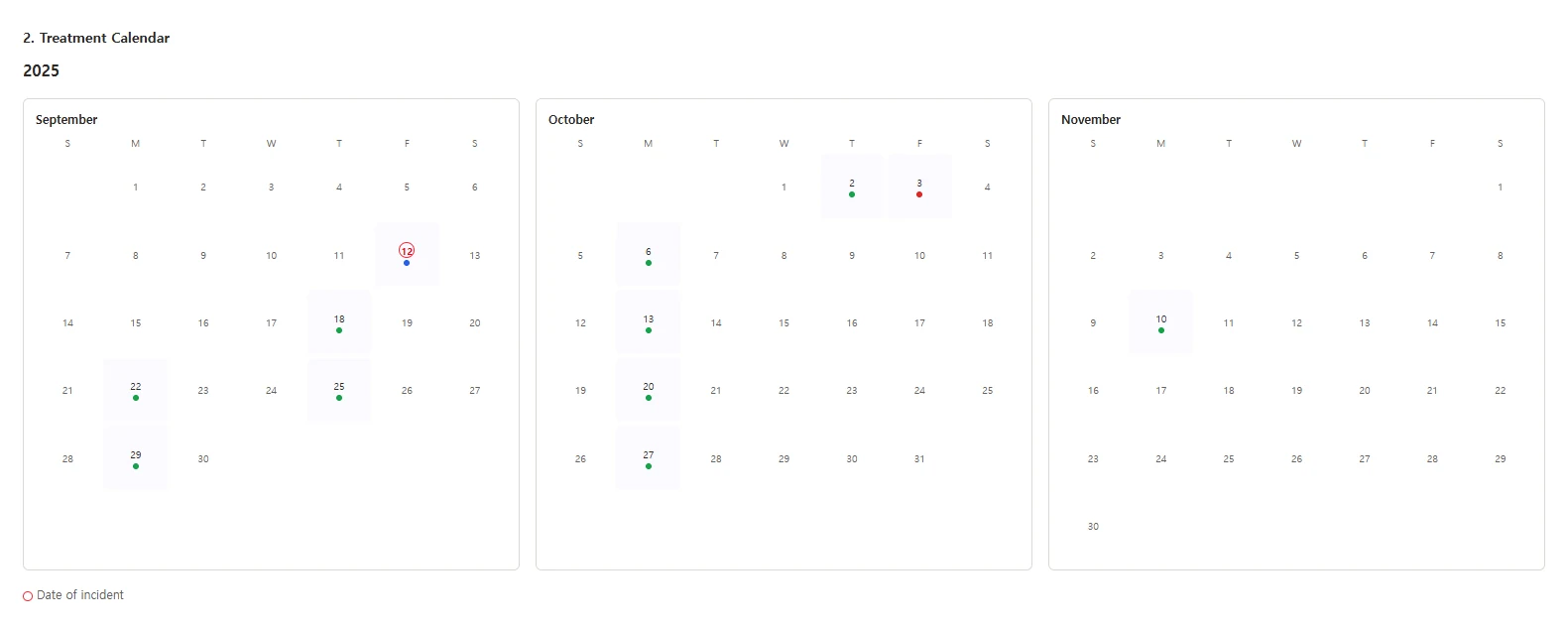
- Keep one provider list. Update it at every client call. Each provider gets a records request and a bill request, each with a date.
- Request early for old records. Providers don't keep them forever. See how long hospitals keep medical records.
- Build the chronology as records arrive. Our medical chronology template shows the format, and the medical record summary guide shows what to write from it.
- Know how the bills are being paid. Treatment on a lien changes the file. See our letter of protection guide.
The step-by-step version of this stretch is in our records-to-settlement workflow.
The Demand and the Negotiation
The demand is where your pre-litigation work becomes visible. Everything your team collected turns into one letter and one number.
- Assemble. Our guide to each section of a demand letter lists what goes in. The economic damages guide covers the specials, and pain and suffering settlement examples covers the rest.
- Choose the kind of demand. An ordinary demand, a policy limits demand, or in California a CCP 999 time-limited demand. That's the attorney's decision.
- Send it the way adjusters read it. See our guide to the demand letter to the insurance company.
- Clear the liens before you promise a net. See medical liens in personal injury cases.
What Does the Paralegal Do, and What Stays With the Attorney?
The paralegal runs the file: intake facts, record requests, treatment follow-up, the chronology and the first draft of the demand. The attorney makes the legal calls. Those include whether to take the case, what it's worth, what to demand, and whether to settle or sue. The attorney also supervises everything the paralegal does.
California puts the line in a statute. Under Business and Professions Code 6450, a paralegal works "under the direction and supervision of" an attorney. The listed tasks include "interviewing clients; fact gathering and retrieving information; drafting and analyzing legal documents." The same section says a paralegal shall not "provide legal advice," "represent a client in court," or "establish the fees to charge a client."
| Task | Paralegal | Attorney |
|---|---|---|
| Taking the client's account at intake | Does it | Decides whether to accept the case |
| Letters of representation and preservation letters | Drafts | Reviews and signs |
| Records, bills and the chronology | Requests, tracks and builds | Reads the result for causation and gaps |
| Questions from the client about what the claim is worth | Passes them on | Answers them |
| The demand letter | Drafts from the file | Sets the number, edits and signs |
| Offers from the adjuster | Logs and relays them | Advises the client and negotiates |
| Settle or file | Prepares the file either way | Decides with the client |
Other states have their own rules, so check yours. For how the drafting share is changing, see how paralegals can cut demand letter prep time and our guide to AI for personal injury lawyers.
Which Deadlines Run During Pre-Litigation?
The statute of limitations runs the whole time, and talking to the adjuster doesn't stop it. For most injury claims it's two years in California and New Jersey, and three in Washington and New York. Claims against public entities have much shorter notice deadlines, often 90 days or six months. Calendar both at intake.
| State | General limitations period | Claim against a public entity |
|---|---|---|
| California | Two years (CCP 335.1) | Present a claim "not later than six months after the accrual of the cause of action" (Gov. Code 911.2). No suit until the claim is acted on or deemed rejected (Gov. Code 945.4) |
| Washington | Three years (RCW 4.16.080) | Present a claim, then wait "sixty calendar days" before suing. The limitations period is tolled during that wait (RCW 4.96.020 for local entities, RCW 4.92.110 for the state) |
| New York | Three years (CPLR 214) | Where a notice of claim is required, serve it "within ninety days after the claim arises" (Gen. Mun. Law 50-e) |
| New Jersey | Two years (N.J.S.A. 2A:14-2, as described in Lopez v. Swyer) | Present a claim "not later than the ninetieth day after accrual of the cause of action" (N.J.S.A. 59:8-8, as quoted in Beauchamp v. Amedio) |
These are the general rules, and the exceptions are many. Minors, late-discovered injuries, medical malpractice and certain defendants all have their own periods. We read the two New Jersey rules through court opinions, not the statute text. Confirm every date against current law before you rely on it.

When Does Pre-Litigation End?
It ends one of two ways. The claim settles, and the file moves to liens, the release and disbursement. Or the attorney decides to file, because the offer is too low, liability is denied, or the limitations date is close. That decision belongs to the attorney and the client. The calendar only forces it.
| Pre-litigation | Litigation | |
|---|---|---|
| Who sets the schedule | The firm | Court rules and the judge |
| How you get information | Authorizations and voluntary requests | Discovery and subpoenas |
| Who's on the other side | An adjuster | Defense counsel |
| What a settlement proposal looks like | A demand letter | Formal offers too, like California's CCP 998 offer |
| What it costs | Mostly staff time and records fees | Filing fees, depositions and experts on top |

Your pre-litigation file isn't wasted if you file. The chronology, the bills and the demand become your starting point for the complaint and the first discovery responses.
Where Pre-Litigation Files Stall
Run this check on any of your files older than 60 days. Each line is a yes or a no.
- The limitations date is on the calendar, and someone other than its author has checked it.
- Any public entity defendant has been ruled in or out, in writing.
- Every provider on the list has a records request and a bill request, each with a date.
- Someone has spoken to the client in the last 30 days.
- Coverage and limits are confirmed, not assumed.
- Every lien holder is identified.
- Every bill in the file matches a visit in the chronology.
A "no" isn't a crisis. It's the next task. The files that hurt are the ones where nobody asked.
Where Lexyno Fits
Lexyno doesn't run your intake, track your deadlines or decide when to file. Those stay with your team and your attorney. Lexyno's AI demand letter software works at stage six. It drafts the demand from the case's records, with source references you can check.
Medical Summary works at stage five. It builds the treatment chronology and flags gaps over 30 days. The attorney still reads the result, sets the number and signs. Plans are on the pricing page.
Build It Before You Need It
Pre-litigation has no judge and no scheduling order. That's why it drifts. The firms that settle well treat it like litigation anyway, with dates, owners and a checklist.
Start from our PI demand letter template, or try Lexyno on one case from your own file, free.
Frequently asked questions
Pre-litigation is the work on a claim before a lawsuit is filed. In a personal injury case it runs from client sign-up through investigation, treatment, records, the demand and negotiation. It ends when the claim settles or the attorney files a complaint.
There is no standard length, and we will not quote one. It depends on how long the client treats, how fast records and bills arrive, and how the insurer responds. The statute of limitations sets the outer limit, and claims against public entities have earlier deadlines.
The paralegal runs the file under attorney supervision: intake facts, letters of representation, record and bill requests, treatment follow-up, the medical chronology and the first draft of the demand. Legal advice, the value of the claim and the decision to settle or sue stay with the attorney.
Not by itself. The limitations period generally keeps running while you negotiate. Washington tolls it during the 60-day waiting period after a tort claim is presented to a government entity. Whether anything else pauses the clock is a question for the attorney.
In pre-litigation, the firm sets the schedule, information comes through voluntary requests and authorizations, and the other side is an adjuster. In litigation, court rules set the schedule, information comes through discovery, and defense counsel takes over.
Many claims resolve before suit, but we have not found a reliable published figure and do not cite one. What a firm can control is how complete the file is when the demand goes out.
Related posts

Requests for Admission in California PI Cases: A Guide
How requests for admission work in a California PI case: the 35 limit, the 30-day response, what happens when a deadline is missed, and cost of proof.

Time Limit for Insurance Claim Settlement: 4 State Rules
No state sets one time limit for insurance claim settlement. WA, CA, NY and NJ set clocks to acknowledge, reply, decide and pay. Here they are.
Economic Damages vs. Noneconomic Damages in PI Claims
What counts as economic damages in a PI claim, how the split from noneconomic damages works in WA, CA, NY and NJ, and how to calculate each line.
What's next?
Ready to see the difference in your next case?
Put these strategies to work. Try a mock demand generated by Lexyno today.
Request Evaluation Access