 Rich Martin
Emotional Distress Damages in PI Claims: How to Prove Them
Emotional Distress Damages in PI Claims: How to Prove Them
When emotional distress is recoverable in a PI case, the bystander and direct-victim rules in WA, CA, NY and NJ, and the evidence that proves it.

Your client stopped driving on the freeway after the crash. They wake up at 3 a.m. and check the locks. In the records, all of that shows up as one word in one note: "anxious." The adjuster will read that word and move on.
Emotional distress damages are real money in a personal injury claim, but only if the law allows them and the file proves them. This guide covers when emotional distress is recoverable, the rules for direct victims and bystanders in Washington, California, New York and New Jersey, the evidence that carries the claim, and how to write it into a demand.
What Are Emotional Distress Damages in a PI Case?
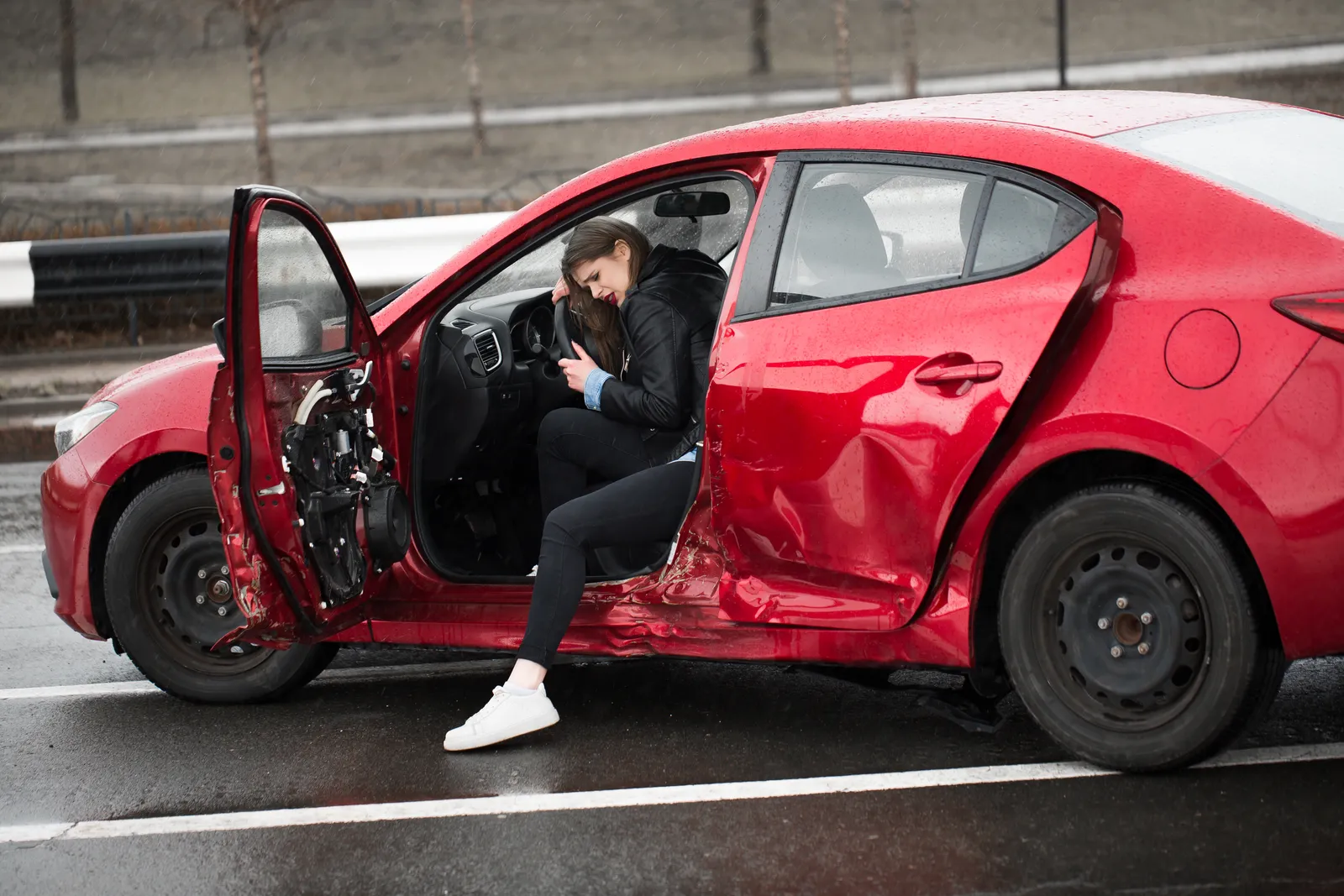
Emotional distress damages compensate for the mental side of an injury: anxiety, fear, grief, humiliation and similar harm. In a case with a physical injury, they're part of noneconomic damages, alongside pain and suffering. A separate legal theory matters mainly when there's no physical injury, the plaintiff is a bystander, or the conduct was intentional.
California's jury instruction on noneconomic damages, CACI 3905A, lists mental suffering, grief, anxiety, humiliation and emotional distress among the losses a jury can weigh. California also treats these damages differently when several defendants are at fault. Under Civil Code 1431.2, liability for non-economic damages, which expressly include emotional distress, "shall be several only and shall not be joint."
| Theory | When it applies | What usually decides it |
|---|---|---|
| Part of the injury claim | Client was physically hurt | Evidence that the distress is real and tied to the injury |
| Direct victim (NIED) | Distress without physical injury, from a duty owed to the plaintiff | The state's rule on duty, genuineness or physical symptoms |
| Bystander (NIED) | Client saw a close relative seriously hurt | Relationship, presence and severity tests |
| Intentional (IIED) | Extreme and outrageous conduct | A very high bar, rarely met in auto cases |
For how to value the noneconomic section once the claim is allowed, see our guide to pain and suffering settlement examples.
Can a Client Recover Without a Physical Injury?
Sometimes, and each state draws the line differently. California allows it where the defendant owed the plaintiff a duty. New York looks for a direct result and some assurance that the claim is genuine. New Jersey's fear cases need substantial bodily injury or sickness, and Washington requires objective symptoms. Know your state's rule before you plead it.
- California. Burgess v. Superior Court says negligent infliction "is not an independent tort, but the tort of negligence." A direct victim needs a duty the defendant assumed, one imposed by law, or one from a relationship between them. Potter v. Firestone confirms that "physical injury is not a prerequisite for recovering damages for serious emotional distress."
- New York. Ornstein allows recovery without physical injury when the harm is a direct result of the breach and there's some assurance the claim is genuine. Plan your evidence around that.
- New Jersey. Under Falzone v. Busch, fright from "a reasonable fear of immediate personal injury" is recoverable when it results in substantial bodily injury or sickness.
- Washington. Bylsma v. Burger King requires distress that is foreseeable, a reasonable reaction and "manifest by objective symptomatology."
What Are the Bystander Rules in Each State?
A bystander claim belongs to someone who saw a close relative seriously hurt. All four served states allow it, with different tests. California and New Jersey focus on the relationship and on seeing the injury. New York requires the plaintiff to be in the zone of danger. Washington lets a relative recover after arriving shortly after the accident.
| State | Leading case | What the plaintiff must show |
|---|---|---|
| California | Thing v. La Chusa (1989) | Closely related to the victim, present and aware of the injury as it happens, and serious emotional distress beyond what a disinterested witness would feel |
| New York | Bovsun v. Sanperi (1984) | In the zone of danger, with contemporaneous observation of serious injury or death to an immediate family member |
| New Jersey | Portee v. Jaffee (1980) | Death or serious injury, a marital or intimate, familial relationship, observation at the scene, and severe distress |
| Washington | Hegel v. McMahon (1998) | Seeing an injured relative at the scene shortly after the accident, before substantial change, with distress shown by objective symptoms |
Two refinements are worth knowing. New Jersey extended bystander protection to an unmarried cohabitant in Dunphy v. Gregor, where the relationship was "stable, enduring, substantial, and mutually supportive." And in 2024, California held in Downey v. City of Riverside that a bystander need not show "contemporaneous perception of the causal link" between the defendant's conduct and the injuries. The plaintiff there heard the crash over the phone.
What About Intentional Infliction of Emotional Distress?
Intentional infliction needs extreme and outrageous conduct, intent or reckless disregard, causation and severe distress. Courts set the bar very high, so it rarely fits a car crash. It matters more in cases with deliberate conduct. Plead it only when the facts truly go beyond ordinary negligence.
The four states phrase it in similar terms. California's Hughes v. Pair describes conduct "so extreme as to exceed all bounds of that usually tolerated in a civilized community," and says the court "has set a high bar." New York's Howell and New Jersey's Buckley use four elements. Buckley held that headaches, embarrassment and lost sleep weren't severe enough. Washington's Kloepfel v. Bokor held that the objective symptom rule for negligent infliction doesn't apply to outrage.
What Evidence Proves Emotional Distress?
Evidence from people other than your client proves it best. That means provider notes that document anxiety or sleep problems, counseling records, prescriptions, and testimony from people who see the client every day. Washington's Supreme Court said bystander distress must be "susceptible to medical diagnosis and proved through medical evidence." Elsewhere, medical proof is still the strongest support.
| Evidence | What it shows | Watch for |
|---|---|---|
| Treating provider notes | Anxiety, sleep loss or mood changes, with dates | One-word mentions. Ask the provider to document what they see |
| Counseling or psychiatric records | Diagnosis, treatment plan, progress | They may become discoverable once the condition is at issue |
| Prescriptions | Medication for anxiety, sleep or depression | Prior prescriptions for the same condition |
| Family, friends, co-workers | Changes in behavior they've seen firsthand | Witnesses with nothing specific to say |
| Work records | Reduced hours, missed days, changed duties | Other reasons for the change |
| Client's journal | Day-to-day detail | It may be discoverable. Decide early whether to use one |
Prior conditions matter here more than anywhere. If your client had anxiety before the crash, your claim is about how much worse it got. Our eggshell plaintiff guide covers that argument. Our records retrieval guide covers getting the counseling records.

Will the Claim Open Your Client's Mental Health Records?
It can, so decide how far to take the claim before you file. In California, there's no psychotherapist privilege for communications relevant to a mental or emotional condition the patient puts at issue. A stipulation can limit a mental examination, but only if the claim stays within the distress usual for the physical injuries.
California's Evidence Code 1016 sets out the patient-litigant exception. CCP 2032.320(c) lets the plaintiff stipulate that no claim is made for distress "over and above that usually associated with the physical injuries claimed," and that no expert will testify about it. With that stipulation, the court won't order a mental examination absent exceptional circumstances.
That's a real trade-off for you and your client. A bigger emotional distress claim can be worth more. It also brings broader discovery into your client's mental health history. Talk it through with your client early, and check your state's rules if you're outside California.
Do Auto Thresholds Limit Emotional Distress?
In some states, yes. New York and New Jersey limit noneconomic recovery in many auto cases, and emotional distress falls inside that category. If your client doesn't clear the threshold, the emotional distress claim goes with the rest of the noneconomic claim.
- New York. Insurance Law 5104(a) bars non-economic loss in covered auto cases "except in the case of a serious injury." The 2026 amendments removed the 90/180-day category and added a $100,000 cap for some at-fault plaintiffs. Our New York no fault guide covers both.
- New Jersey. A client bound by the limitation on lawsuit option recovers noneconomic loss only for the injuries listed in N.J.S.A. 39:6A-8(a). See our NJ verbal threshold guide.
- California. Prop 213 bars non-economic damages for some uninsured owners and drunk drivers, with an exception covered in our Civil Code 3294 guide.
How Are Emotional Distress Damages Taxed?
It depends on whether the distress comes from a physical injury. Treasury regulations say damages for emotional distress attributable to a physical injury are excluded from income. But emotional distress alone isn't treated as a physical injury, apart from amounts paid for related medical care. Clients should get tax advice before they sign.
The rule is in 26 U.S.C. 104(a)(2), which says "emotional distress shall not be treated as a physical injury or physical sickness," and in 26 CFR 1.104-1(c). For your PI clients with a physical injury, the distress damages usually follow the injury. For a standalone claim, the answer can be different. Flag it, and point your client to a tax professional.
How Do You Write Emotional Distress Into a Demand?
Tie each claim to a record and a date. Name the condition, show when it started, and connect it to the injury. Then show what it changed in your client's life, using the provider's words where you can. Leave the adjectives out, because the adjuster discounts them first.
Weak: Our client has suffered severe emotional trauma.
Better: Three weeks after the crash, her physician noted anxiety while driving and referred her to counseling. She has attended eight sessions, and she still avoids the freeway.
The second version gives the adjuster a date, a provider, a referral and a change in behavior. Here's how the demo demand letter puts it.
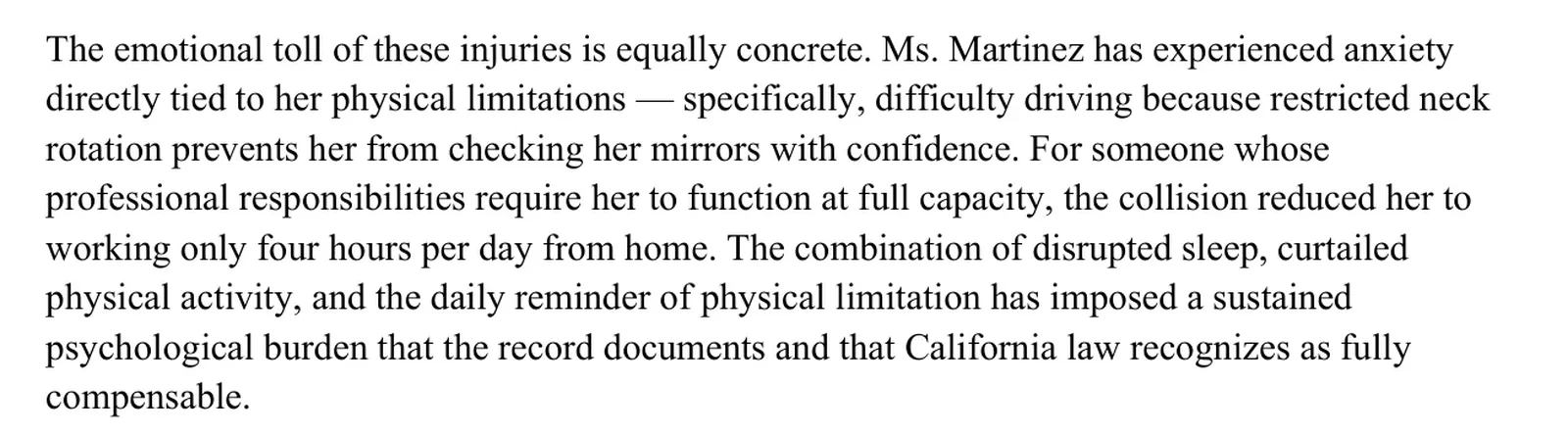
Put the section after the medical summary and the specials, so it reads as the human result of the record. Our guide to each section of a demand letter shows the order, and our guide to the demand letter to the insurance company covers how adjusters read it.
Where Lexyno Fits
Lexyno doesn't decide whether a claim supports emotional distress damages, or what they're worth. That's the attorney's judgment. Lexyno's AI demand letter software drafts the demand from the case's records, including the noneconomic damages section, with source references you can check.
Medical Summary builds the treatment chronology, so you can see when anxiety or sleep problems first appear in the records. POV reports read the same record from the insurer's side, to show where the claim will be challenged. Plans are on the pricing page.
Make the Invisible Part of the Injury Visible
Emotional distress is the part of an injury no one can see on an X-ray. The law lets clients recover for it when the state's rules are met and the record backs it up. Know the rule, build the record, and decide early how much of the client's history you're willing to open.
Start from our PI demand letter template, read our medical record summary guide, or try Lexyno on one case from your own file, free.
Frequently asked questions
In a physical injury case, usually yes. They are noneconomic damages, and California’s jury instruction lists emotional distress, anxiety and mental suffering among them. A separate claim is needed only when there is no physical injury, or for a bystander or an intentional tort.
Sometimes. Each state has its own rules. California allows it where the defendant owed the plaintiff a duty, New York requires a direct result and some assurance the claim is genuine, New Jersey’s fear cases need substantial bodily injury or sickness, and Washington requires objective symptoms.
A claim by someone who saw a close relative seriously hurt. California requires a close relationship, presence at the scene and awareness, and serious distress. New York requires the plaintiff to be in the zone of danger. New Jersey and Washington have their own tests.
Provider notes that document anxiety, sleep problems or depression, counseling records, prescriptions, and testimony from people who see the client every day. Washington’s Supreme Court said bystander distress must be susceptible to medical diagnosis and proved through medical evidence.
It can. In California, there is no psychotherapist privilege for communications relevant to a mental or emotional condition the patient puts at issue. A stipulation under CCP 2032.320(c) can limit a mental examination when the claim is only the distress usual for the physical injuries.
Damages for emotional distress attributable to a physical injury are excluded from income under Treasury regulations. Emotional distress alone is not treated as a physical injury under section 104(a)(2), apart from amounts paid for related medical care. Clients should ask a tax professional.
Related posts

Requests for Admission in California PI Cases: A Guide
How requests for admission work in a California PI case: the 35 limit, the 30-day response, what happens when a deadline is missed, and cost of proof.

Pre-Litigation in a PI Case: Stages and Who Does What
What pre-litigation covers in a PI case: the seven stages, what the paralegal and the attorney each do, and the deadlines that keep running.

Time Limit for Insurance Claim Settlement: 4 State Rules
No state sets one time limit for insurance claim settlement. WA, CA, NY and NJ set clocks to acknowledge, reply, decide and pay. Here they are.
What's next?
Ready to see the difference in your next case?
Put these strategies to work. Try a mock demand generated by Lexyno today.
Request Evaluation Access